Showing posts with label recycle. Show all posts

Tuesday, 6 January 2015

9. - Design to Dematerialise & Develop Systems & Services

This strategy (Design to Dematerialize & Develop Systems & Service) shows how systems and services provide access to the function or benefit of the product without the consumer having to own the product. It is a systematic way of thinking, where everything is connected like a complex web of relationships. It highlights the multi-functional development of online/local communities.

"Systems & services design illustrates how consumers needs can be met with services as opposed to tangible products, and at the same time provide economic and environmental benefits" (Manzini, E.2001)


Boris Bike


Boris bikes or Barclays Cycle Hire are a amazing example of a service that everyone can use easily whenever and wherever they want. The cost of a service is a 2 pounds you can hire out the Barclays bicycle bikes for 24 hours and it is only 90 pounds for a year.
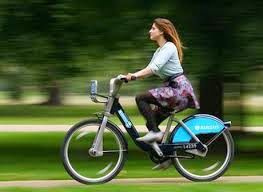

First time when I came to London. I saw those bicycles most of everywhere when I visited. I had been curious to known what is services and How everybody can used on this services. Moreover, I felt this idea is every helpful for consumer, also environment. It can decrease the air pollution in the street as well, made people turn to do more activities.  It is such a great method of transport that Boris Johnson hopes will becomes as popular as black caps or red bus around the streets of Londons


References 

Edinburg's News. (n.d.) Boris-bike-style Scheme 'would help city cycling. [Online] Available at:<http://www.edinburghnews.scotsman.com/news/boris-bike-style-scheme-would-help-city-cycling-1-3650919> [Accessed 5 January 2015]

Visitlondon.com. (n.d.) London Cycle Hire Scheme. [Online] Available at:<http://www.visitlondon.com/traveller-information/getting-around-london/london-cycle-hire-scheme> [Accessed 5 January 2015]


Monday, 5 January 2015

8. Design to replace the need to consume

The idea of this strategy is products can adapt and change with age. Also this strategy is also about exploring alternative forms of design and consumption for example co-design and collaborative consumption. 

Many of us buy items that we see in magazines, newspaper, promoting by celebrity, on billboard daily because we are subconsciously convinced the we want those of this products. Is this correct or not? In my view, I know there are items in my wardrobe that have never been worn, or used just only once. I know because the shopping label is still visible. I wondering why I bought this in the foirrst place, greed is certainly the case in the most circumstances or the face we see it in a shop and instantly think we need it. With the development of fast fashion and street fashion, retail sales are growing stronger and faster year by year. People have been spending more money for buying sales products. I think the most important point for consumer would be price and functions. Does buying consumer goods make us happy? If so, surely may be that happiness will fades quickly? So, I through these variety of clothes, people take  " what are they like" in consideration. This is suit with quality and price even these goods is sales or not?

"Most products create a small amount of empathy at the point of purchase, from that point on the length of the product's lifespan depends upon how well the product can maintain empathy with the use. Waste, therefore, can be seen as expired empathy." Jonathan Chapman (2006)

KEEP & SHARE - Amy Twigger Holroyd


The Keep&Share Philosophy states that we should buy less, more special pieces and keep them for longer. They aim to create garments that last, as are sick and tired of pieces being thrown away before they have reached their wearability. They combine the familiar and the unconventional to create designs that will stand the test of time. They emphasize on 'slow fashion'- choosing quality over quantity, where designers are much more aware of the impacts of products on workers, communities and ecosystems.It allows companies to invest in the product in the long term and create more beneficial relationships. I feel this made us more connected to the garment as it has been made in a more loving way rather than been manufactured by a large industrial machine.  


After you buy ur time from Keep& Share. You are too afraid of washing your items then you can send them back to KeepandShare and they will wash it and return it to you. And any damage, well that can be sent back to the company to be repaired.


Reference

Keep & Share. (n.d.) KEEP & SHARE - Amy Twigger Holroyd. [Online] Available at:<http://www.keepandshare.co.uk> [Accessed 5 January 2015]

Monday, 22 December 2014

MILCH Upcycles Trousers, Shirts into Menswear-Inspired Eco-Fashion


Milch has always liked to borrow clothes from boys. There is one way to always get the menswear-inspired to womens'. The designer named MILCH, is dutch designer who steals, borrow, and pick an idea and design from the lads. They used refashioning secondhand men's garment such as men's trousers and shirts to create, adapt, design into gender-bending womenswear. Foe instant, Milch picked a boy white t-shirt to created a long dress (Tencel men's shirts into dresses, skirts, blouses, and hats with a play-around a new design).


" We pay attention to ecological and socio-cultural aspects in the production chain as a whole," says Cloed Priscilla Baumgartner, MILCH's designer and founder. "The raw material [men's suits and shirts which have been laid aside] comes fromVienna and is processed in responsible factories."

This is an amazing garment!!!! I am very appreciate in avant guard design. In the present, fashion and textiles industries in the 65percent of clothes they throw away go strange to a land fill. Which is a waste way and destroy environment as well. As a designer we can do for save and reused a product for global. We should rethinking again in design or product when we need to remade it again. This company has very great idea for use a second hand or old shit for redesign to use in other gender. That is means they can provide the product cross over use only one gender. Moreover, They uses leftover old cloths to make a new garment that is not only visually appealing but environmentally friendly as well.


Reference

Chua, Jasmin Malik,. (2010) MILCH Upcycles Trousers, Shirts into Menswear-Inspired Eco-Fashion. Available from: <http://www.ecouterre.com/milch-upcycles-trousers-shirts-into-menswear-inspired-eco-fashion/> [Accessed: 22 December 2014]

2 - Design for Cyclability

This strategy concern about a process of converting waste material or useless products into new product or as same as never was product of better quality or a higher, friendly environment value. To a product through the process of recycling  by itself or human-made ( reuse, repair, recycle, reading,).  By taking some of items that is old or non-use and giving a new design or remade in a better way to creating a new product. From old product. they will cut, change, and edit some part for renew. From all of these scrap fabrics are still functional, beautiful, and useable again. This is a incredibly beneficial to the environment. For example, a old jacket jeans they can remade from jacket to a bag or cut long jacket sleeve to short sleeve as a new design. 


Incredible Upcycled Gown Made From 1,000 Newspaper Cranes.


This origami dress was created by Yuliya Kypro. She turned 1000 paper cranes into a dress. She assembled her headlining bustier dress (complete with a flowing peacock train. This dress piece is not only stunning to audience but also help Eco friendly, she painstakingly folded each and every one of the origami bird from old Metro newspaper. 


Reference

Ecouterre,. (2010) Incredible Upcycled Gown Made From 1,000 Newspaper Cranes. [Internet]. Available from: <http://www.ecouterre.com/extreme-origami-an-upcycled-gown-made-from-1000-newspaper-cranes/> [Accessed: 22 December 2014]


Saturday, 1 November 2014

The Cabbage Chair


We cannot reject that needless waste and heaps of scarps fabric are part of the equation in textile's and fashion malfunctioning process in industry. Many designers designed amazing product that related to cutting edge fashion and eye-catching furniture designs. On the other hand, this process will come with a huge cost in term of useless element.


The Cabbage Chair design by Japanese designers, Nendo. He determines this trend by using waste paper from the pleated fabric industry and turning in to an organic shape. This furniture textile waste chair was designed for the exhibition, the XXIst Century Man Exhibition, curated by Issey Miyake, in Tokyo.

As Nendo (n.d.) has described, the Cabbage Chair fits (our) active, optimistic, and forward-moving ’21st century selves,’ the kind of people who, to borrow a concept Miyake expressed during a meeting with us, ‘don’t just wear clothes, but shed their skin'.


Amazingly, this Cabbage chair was made from used product in the textile industry. From a huge of paper from industry that usually abandon and unwanted product. This is clever solution with waste things by recycle to a renewal for textile and furniture industry.

In my opinion, there many have unwanted products from there production not only a piece of paper from pleated process but also included environment production around us. This is one of first step that creative new design for recycle useless product as a new. In my project, I used  heat transfer technique by use transfer dyed paper on to fabric, which this produced in mass amounts during the process of making print pattern. There product are unused and waiting for throe it away. In the same way, I would like to use some paper to create some lamp cover in origami design. This is a good way for use unwanted thing to newly.


Refernces

Dezeen Magazine,. (2008) Cabbage Chair By Nendo. [Internet]. Available from:<http://www.dezeen.com/2008/03/06/cabbage-chair-by-nendo/> [Acessed: 1 November 2014]

Nendo,. (2008) Cabbage Chair. [Internet]. Available from: <http://www.nendo.jp/en/works/cabbage-chair-2/> [Accessed: 1 November 2014]